Author: achan@precisityenterprises.com

  • Exploring the Urban Manual: Your Guide to Cars, Finance, and Gadgets

    Introduction to the Urban Manual

    The Urban Manual serves as a comprehensive guide for modern individuals navigating the complexities of urban life. Covering essential topics, this digital resource includes a plethora of in-depth articles and detailed product reviews, making it a must-visit for anyone interested in enhancing their lifestyle.

    The Garage: A Haven for Car Enthusiasts

    One of the primary sections of the Urban Manual is the Garage, dedicated specifically to cars. Here, readers can find detailed reviews of the latest vehicle models, informative articles on maintenance, and tips on optimizing performance. Whether you are an avid car collector or a casual driver, the Garage is designed to cater to your needs, allowing you to make informed decisions before any purchase.

    The Vault: Managing Your Personal Finance

    Another crucial element of the Urban Manual is the Vault, which focuses on personal finance. This section aims to empower readers by providing them with strategies for budgeting, saving, and investing. The Vault includes practical advice along with comprehensive resources that demystify the often daunting world of finance, allowing individuals to take control of their financial future successfully.

    The Kit: Gadgets and Toys for the Tech-Savvy

    For those who love innovation and entertainment, the Kit section presents an exciting range of gadgets and toys. With detailed product reviews and insights into the latest trends, the Kit helps readers discover new tools and technologies that can enhance their daily lives. This resource ensures that you are always equipped with the latest advancements, making it a go-to destination for tech enthusiasts.

  • Exploring The Urban Manual: A Comprehensive Guide for Modern Living

    Welcome to The Urban Manual

    The Urban Manual is designed for the modern individual navigating today’s fast-paced lifestyle. This digital guide offers essential insights across three main sections: the garage, the vault, and the kit. Each section is tailored to meet the diverse needs of urban living.

    The Garage: Car Culture in the City

    The garage section delves into everything automotive, from the latest car models to maintenance tips that every driver should know. Whether you’re a car enthusiast or simply looking for practical advice, our in-depth articles cater to all aspects of car culture.

    The Vault: Mastering Personal Finance

    In the vault, we focus on personal finance, providing valuable resources to help individuals manage their money effectively. From budgeting tips to investment strategies, our articles aim to empower readers to take control of their financial future. Explore detailed product reviews that enhance your financial literacy and decision-making.

    The Kit: Gadgets and Toys for Modern Life

    The kit is packed with insightful guides covering the latest gadgets and toys that appeal to a tech-savvy audience. Discover thorough reviews, comparisons, and recommendations that can enhance your everyday life. From must-have tech tools to fun gadgets, The Urban Manual ensures you stay updated on what’s trending.

    With each section rich in information and resources, The Urban Manual stands as your go-to guide for navigating modern life. Join us in exploring the dynamic world around you!

  • Musical Chairs

    If you’ve been following my journey to build the ultimate budget sim rig for F1 25 and Gran Turismo, you know it’s been a mix of high-speed excitement and technical pit stops. My goal was to create a professional-feeling setup for my son and me without breaking the bank, but the road has been a bit bumpier than expected.

    The RS50 Update: Still Stuck in the Pits

    As I mentioned previously, I chose the Logitech RS50 (Racing Series 8Nm base) as the “Goldilocks” solution for our PS5 setup. On paper, its TrueForce technology and native compatibility made it the perfect choice. However, I’ve been plagued by the “Three Dots of Doom”: the unit powers on, I select “PS5,” and then it immediately shuts down with three blinking dots.

    The support experience has been just as frustrating as the hardware failure. After a dead-end chat session, my only form of contact has been through email, with responses taking days to arrive. Logitech has now requested that I send the base back for evaluation. They claim that after 72 hours of receiving it, they will reach a “decision.” It’s a baffling process considering the unit never worked right out of the box. I’ve shipped it back and can only hope they recognize the defect and send a brand-new replacement so we can finally get on the track.

    The Cockpit Comparison: Playseat vs. GTPlayer

    While waiting for the “brain” of the rig to return, I’ve had plenty of time to evaluate the two cockpits I’ve tested. Both sit around the $400 mark, but they serve very different needs.

    • Playseat Challenge DD F1 Edition: This rig is all about the “cool factor” and that iconic, low-slung F1 posture that makes you feel like Carlos Sainz. You are essentially paying a “space-saving tax” and a “corporate branding tax” for the ability to fold it into a closet.
      • The Downside: It’s held together by straps and hinges, which leads to significant flex when using a Direct Drive wheel. More importantly, it lacks versatility; if you want to “row gears” with a manual shifter, you’re out of luck, as there is no native way to add one.
    • GTPlayer S03: This is a fixed-frame rig made of 2-inch alloy steel, and it has quickly become my preferred choice. In sim racing, “solid” usually beats “sleek,” and the rigidity here ensures that all the feedback goes into your hands rather than a wobbling frame.
      • The Upside: The reclining racing bucket seat is incredibly comfortable and includes built-in Bluetooth headrest speakers. It also features a sliding seat rail, allowing my son and me to swap drivers in seconds without any tools. Plus, unlike the Playseat, it actually includes the ability to mount a shifter and an e-brake, making it a much more complete package for different racing styles.

    Final Thoughts

    If you have a dedicated corner for your hobby, the GTPlayer S03 offers significantly more “bang for your buck”. You get a stable, feature-rich steel cockpit for the same price as a “fancy folding chair”. Now, I just need Logitech to step up so I can actually put this rig to the test.

    Stay tuned for the “decision” on the RS50—I’ll be sure to share whether I’m back in the race or looking for a total refund.

  • The RS50 “Three-Dot” Trap: My Sim Racing Setup is a $1,000 Paperweight

    We’ve all seen the marketing: “Plug-and-play.” “TrueForce immersion.” “Pro-grade performance.” But my experience with the Logitech RS50 on my PS5 has been anything but “pro.” It’s been a masterclass in frustration.

    After spending hours bolting the gear onto my cockpit, I was ready for the green light on F1 25. Instead, I got the digital equivalent of the big FU.

    The “Three Dots” of Doom
    Here is the loop I’m stuck in: I wire everything up and boot the console. The wheel base powers on, and I get the option to select my platform (PS5, PS4, or PC). I select PS5, hoping for that satisfying calibration spin.

    Nothing. I get three blinking dots on the display, and then the unit simply shuts off. No input recognition, no force feedback—just a cold, expensive piece of metal and plastic attached to a very comfortable chair.

    The Troubleshooting Rabbit Hole
    I haven’t just been sitting here complaining. I’ve spent the last 48 hours in the trenches of Reddit and Facebook groups, trying every “voodoo fix” suggested by the community:

    The Power Cycle: Unplugging and replugging in every possible sequence during the PS5 boot-up.

    The Port Shuffle: Swapping between every USB port on the console and trying different high-speed cables.

    The Hardware Variable: I even tried a different PS5 to rule out my console being the issue. Same result.

    The Plot Twist: I actually managed to get it to connect to a PC after some serious trial and error. I even successfully updated the firmware! But the moment I bring it back to the PS5 and toggle the mode back to console… three dots, power down. —

    Logitech “Support” (Or Lack Thereof)
    If the hardware failure was frustrating, the customer service experience has been downright insulting. I tried the Logitech live chat, and after navigating a gauntlet of bot questions, I finally reached a human named Lekhana.

    (7:21:06 pm) Lekhana: There is dedicated team which handles this issue I will be transferring this ticket to the concerned team of Logitech. Once I transfer the ticket you will be assisted via chat within 5 minutes if not you will be assisted via mail.

    I sat there. I waited. I sent “Hello?” and “Is anyone there?” into the void for an hour. Nobody came back. I eventually gave up and went to bed feeling completely defeated.

    Two days later, I finally got an email asking for the details I had already provided in the chat and then some. I replied immediately. Now? I’m back to playing the waiting game.

    Final Thoughts
    When you pay a premium price for “next-gen” gear, you expect a premium experience—or at the very least, a product that turns on. Right now, my GTPlayer cockpit is just a very fancy place to sit while I browse support forums on my phone.

    I’ll keep you all posted on whether Logitech actually stands behind their product or if I’m headed for a total refund. asking for more details which I provided. Still waiting for a response. I’ll keep you posted.

  • Why I Skipped the “F1 Foldable” for a Solid Foundation

    When I was shopping for a cockpit to house my new 8Nm Logitech setup, I almost clicked “Buy” on the Playseat Challenge DD F1 Edition. It had that iconic, low-slung F1 posture that makes you feel like Carlos Sainz. But after looking at the $400 price tag, I realized I was paying a “space-saving tax” as well as a “corporate sponsor tax.”

    I didn’t need the rig to disappear into a closet. I needed it to stay still. Here’s why I went with the GTPlayer S03 instead.

    1. Rigidity Over Portability

    The Playseat is essentially a high-end lawn chair. It’s impressive for what it is, but at the end of the day, it’s held together by straps and hinges. When you’re pushing a Direct Drive wheel to its limit, any hinge is a potential point of “flex.”

    The GTPlayer S03 is a fixed frame made of 2-inch alloy steel. There are no straps to tighten or hinges to wobble. When I hit a curb in the game, the force goes into my hands, not into a folding mechanism. For the same $400, I traded “foldability” for “rock-solid stability.”

    2. The “Dad & Son” Factor: Real Adjustability

    This was the clincher. Sim racing is more fun when you can share it, and my son was just as excited as I was.

    • The Playseat Challenge: Adjusting a foldable rig for different heights usually involves re-velcroing straps and shifting the entire frame. It’s a chore.
    • The GTPlayer S03: It features a sliding seat rail just like a real car. In five seconds, we can slide the seat forward for him or back for me. No tools, no frustration, and the pedals stay exactly where they belong.

    3. Bang for the Buck

    For the same price as the “entry-level” foldable F1 seat, the S03 felt like a complete furniture upgrade.

    • The Seat: A fully padded, reclining racing bucket vs. a suspended fabric seat.
    • The Audio: The S03 includes built-in Bluetooth headrest speakers.
    • The Longevity: I don’t have to worry about a joint wearing out or a strap fraying over time.

    Final Thoughts

    The Playseat F1 Edition definitely wins on “cool factor” and that specific reclined F1 slouch. But for a household where the rig has a dedicated corner and two different drivers, the GTPlayer S03 was the smarter investment. I got a professional-feeling, rigid steel cockpit for the price of a fancy folding chair.

    In sim racing, “solid” usually beats “sleek.”

  • The Sim Rig Journey: Finding the “Brain” and the “Brawn” on a Budget

    When you start researching sim racing, every forum and YouTube video tells you the same thing: The “best” brain for a rig is a PC. They aren’t wrong. With massive processing power, high-end graphics cards, and the ability to run triple-monitor setups, a PC offers the most immersive experience and endless hardware combinations.

    But let’s be real—I’m trying to keep this to a budget. I’m also new to this; who’s to say I’ll even like the experience in six months? Since I managed to snag an extra PS5 for under $200, I decided that would be my starting point. It’s powerful, reliable, and significantly cheaper than a dedicated gaming PC.

    The $1,000 Challenge

    I set a strict budget of $1,000 for the hardware. In my mind, the bulk of that money should go toward the steering wheel and pedal combination. That’s where the “real” feeling of driving comes from, right?

    I started my search at Microcenter. They had the Logitech G923 on display, and while it looked okay, the moment I touched it, I was disappointed. It felt… “toy-ish.” It didn’t have the weight or the resistance of a true steering wheel, and I knew right then that I wouldn’t stay satisfied with it for long.

    The Direct Drive Dilemma

    After hours of research, I realized that Direct Drive (DD) was the only way to go. Instead of using gears or belts to turn the wheel, the wheel is mounted directly to the motor shaft. This provides instant, high-fidelity feedback. The problem? They are expensive, and PS5 compatibility is surprisingly rare.

    • Fanatec: A great option, but very “a la carte.” By the time I added load-cell brakes and the specific PlayStation-compatible base, the price skyrocketed.
    • Logitech G Pro: Beautiful hardware, but at over $1,000 for the set, my entire budget would be gone before I even bought a seat.

    Finding the Middle Ground: The Logitech RS50

    Then I found the Logitech RS50 (the Racing Series 8Nm base). At around $700 shipped, it felt like the “Goldilocks” solution. Since I’m primarily focused on F1 racing, I didn’t need a dedicated shifter or a clutch pedal, which kept the cost down.


    The RS50: Pros and Cons

    If you’re looking at this base for your own PS5 setup, here is what I’ve discovered:

    The Advantages

    • TrueForce Technology: This is a game-changer. It uses the game’s audio and physics to send high-frequency vibrations through the wheel. You don’t just feel the turn; you feel the engine’s RPM and the specific “thump” of the F1 curbs.
    • 8Nm of Torque: This is the “sweet spot.” It’s strong enough to provide a realistic struggle in high-speed corners without being so powerful that it hurts your wrists or requires a professional-grade steel chassis.
    • Natively PlayStation: No adapters, no workarounds. It just works.

    The Disadvantages

    • Ecosystem Locking: You are mostly tied to Logitech’s ecosystem. If you want a specific third-party rim, you’ll likely need expensive adapters.
    • Build Materials: To hit that price point, there is more plastic involved than in the ultra-premium $1,500 bases. It’s sturdy, but it doesn’t have that “industrial tool” feel.
    • Fixed Power: Unlike some competitors where you can buy a larger power brick later to increase the strength, the RS50 is fixed at 8Nm. What you buy is what you get.

    Next Steps

    By choosing the RS50, I’ve managed to secure a high-end Direct Drive experience while keeping $300 left in the bank. Now comes the next challenge: What do I bolt this thing to?

  • From DTS Newbie to Sim Rig Builder: My F1 Journey

    In mid-2024, I took a casual look at Formula 1 and got absolutely hooked. I’ve always been a “car guy,” but professional racing never really clicked for me until then. Like most newcomers, I didn’t know the grid, so I naturally gravitated toward the man winning everything: Max Verstappen. To catch up, I binged Drive to Survive on Netflix to put faces to the helmets. But the real drama started off the track. At the end of 2024, the “Silly Season” went nuclear when Ferrari dropped Carlos Sainz—not for lack of talent, but because they had the rare chance to sign 7-time World Champion Lewis Hamilton.

    Finding My Favorite Driver

    Watching the 2025 season unfold was wild. While Lewis struggled to find his footing with the Scuderia, Carlos fought through the growing pains of a new team, eventually finding his rhythm to bag points and podiums. There’s something about the underdog story that resonates; Carlos became my favorite driver right then and there (“Vamos!”).

    Bringing the Track Home

    The obsession eventually bled into the living room. My son and I picked up a PS5 to play F1 25, and we’re still tearing up the virtual tracks today. I just finished watching the Chinese Grand Prix—what a race! Between the constant overtakes and Kimi Antonelli making history as the second-youngest race winner ever (trailing only Max), I was on the edge of my seat.

    That adrenaline rush convinced me: It’s time to build a sim rig.

    I just picked up a second PS5 so my son and I can race properly. I’m currently deep in the rabbit hole of reviews, trying to navigate the endless options for cockpits and peripherals.

    The Current Game Plan:

    • The Essentials: A solid racing seat and a high-quality wheel/pedal combo (looking at Direct Drive options!).
    • The Future: Looking into VR or high-end headsets down the road for total immersion.
  • Okay, We Need to Talk About “56 Days” on Prime Video…


    If you haven’t seen the thumbnail for 56 Days yet, it’s basically a mood board for “bad decisions.” It just dropped on Prime Video, and honestly? It’s exactly the kind of unhinged, “trashy-but-make-it-prestige” thriller we deserve right now.

    Think Gone Girl meets a very dark rom-com that went off the rails. It’s based on Catherine Ryan Howard’s book, but the show swaps the Dublin setting for Boston, dials up the heat, and adds a lot more secrets.

    The Setup (It’s Messy)
    The show starts with a crime scene that is… well, it’s gross. A body is found in a bathtub, and it’s been there so long that even the cops are losing their lunch.

    The story then jumps back and forth between Then and Now:

    The “Then”: Ciara (Dove Cameron) and Oliver (Avan Jogia) meet in a grocery store. They’re both hot, weirdly secretive, and move in together after knowing each other for about five minutes.

    The “Now”: Detectives are trying to figure out which one of them is dead in that tub and which one is currently on the run.

    The “Ciara” Problem
    Can we talk about Ciara for a second? Dove Cameron is leaned all the way into the “uncanny valley” vibe here. Honestly, she is super creepy.

    It’s not just her personality—though she’s definitely calculating and has that “stares-at-you-while-you-sleep” energy—it’s the way she looks. She has this wide-eyed, porcelain-doll face that feels totally vacant one second and predatory the next. You never know if she’s falling in love or planning where to hide Oliver’s body. It’s genuinely unsettling to watch her move through the apartment like a ghost.

    Why I’m Obsessed
    The Chemistry is Fire: Despite Ciara being a total creep, her and Avan Jogia have that “we’re definitely going to ruin each other’s lives” energy that makes for great TV.

    The “Who is the Victim?” Hook: Usually, you know who died and you’re looking for the killer. Here, the body is so decomposed that you spend half the season guessing who is actually in the tub. It keeps you constantly second-guessing who the “villain” really is.

    It’s a Quick Binge: There are only eight episodes. You can easily knock this out on a rainy Saturday while questioning all your own dating choices.

    The Verdict
    Is it high art? No. Is it addictive as hell? Absolutely. It’s moody, it’s sleek, and the twists actually landed for me (even though I usually see them coming a mile away). If you like thrillers where everyone is lying and the lead actress gives you the actual creeps, you’re going to love this.

    Quick Warning: If you’re a total book purist, be prepared—they changed a lot. But honestly? The show’s version of the ending is way more dramatic.

  • The Ultimate WFH Command Center: How I Levelled Up My Desk Setup

    Let’s be honest: working from home comes with a unique set of challenges. I’m not talking about the constant snacks or the lure of the kitchen—I’m talking about the struggle of sitting at a desk all day and actually feeling comfortable and productive.

    Lately, my social media has been full of “desk-setup” inspiration, and one thing kept popping up: modular monitor stands. Not just a shelf to plop a screen on, but a system. I finally pulled the trigger on a setup that has elevated my workspace 10-fold, and I’m never going back.

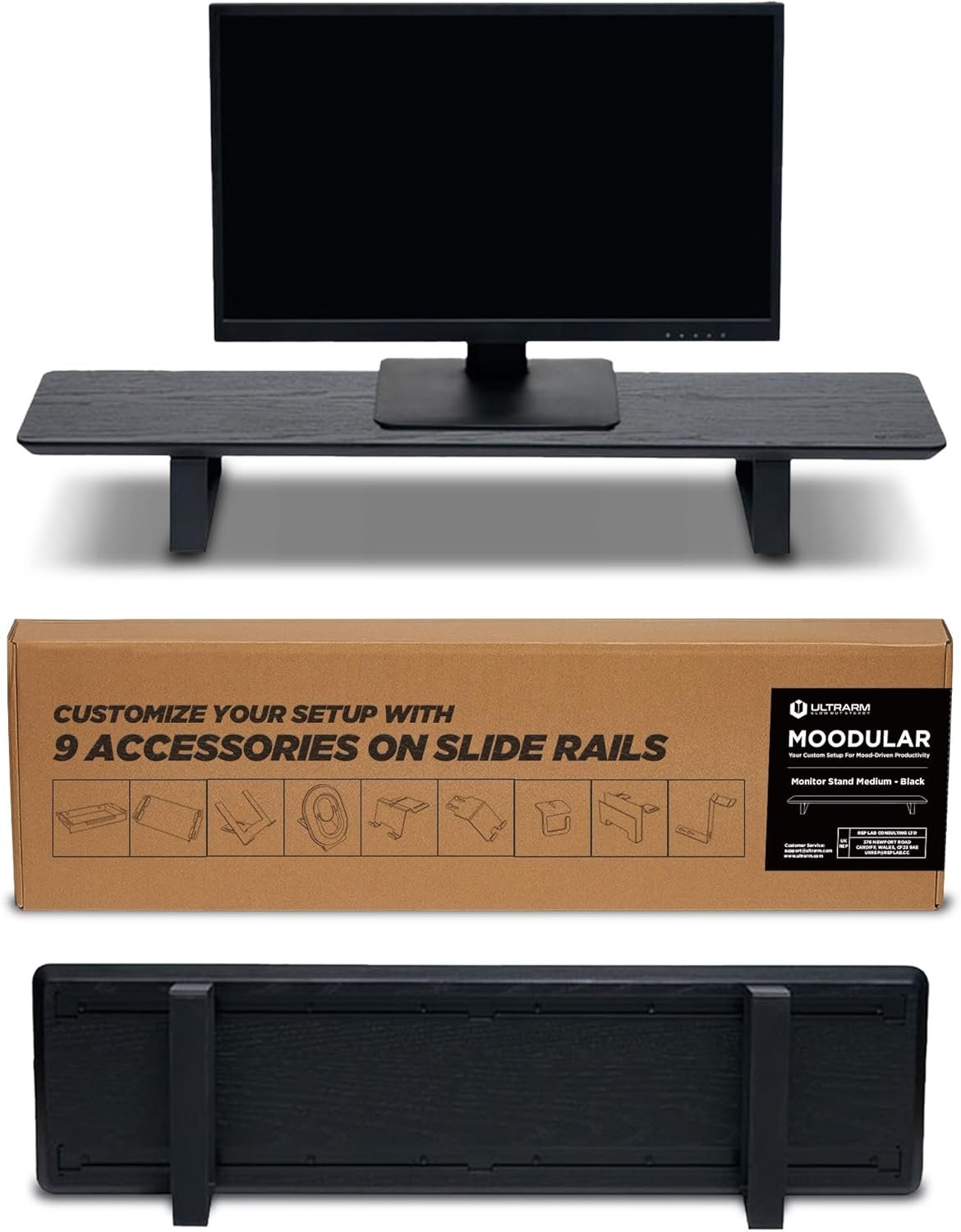
    1. The Foundation: Moodular Wooden Monitor Stand (MS85-B)

    The heart of my new setup is the Ultrarm Moodular Wooden Monitor Stand (33.4”) in black. Unlike traditional risers, this has metal slide rails that let you customize your workspace like Lego for adults. I kitted mine out with:

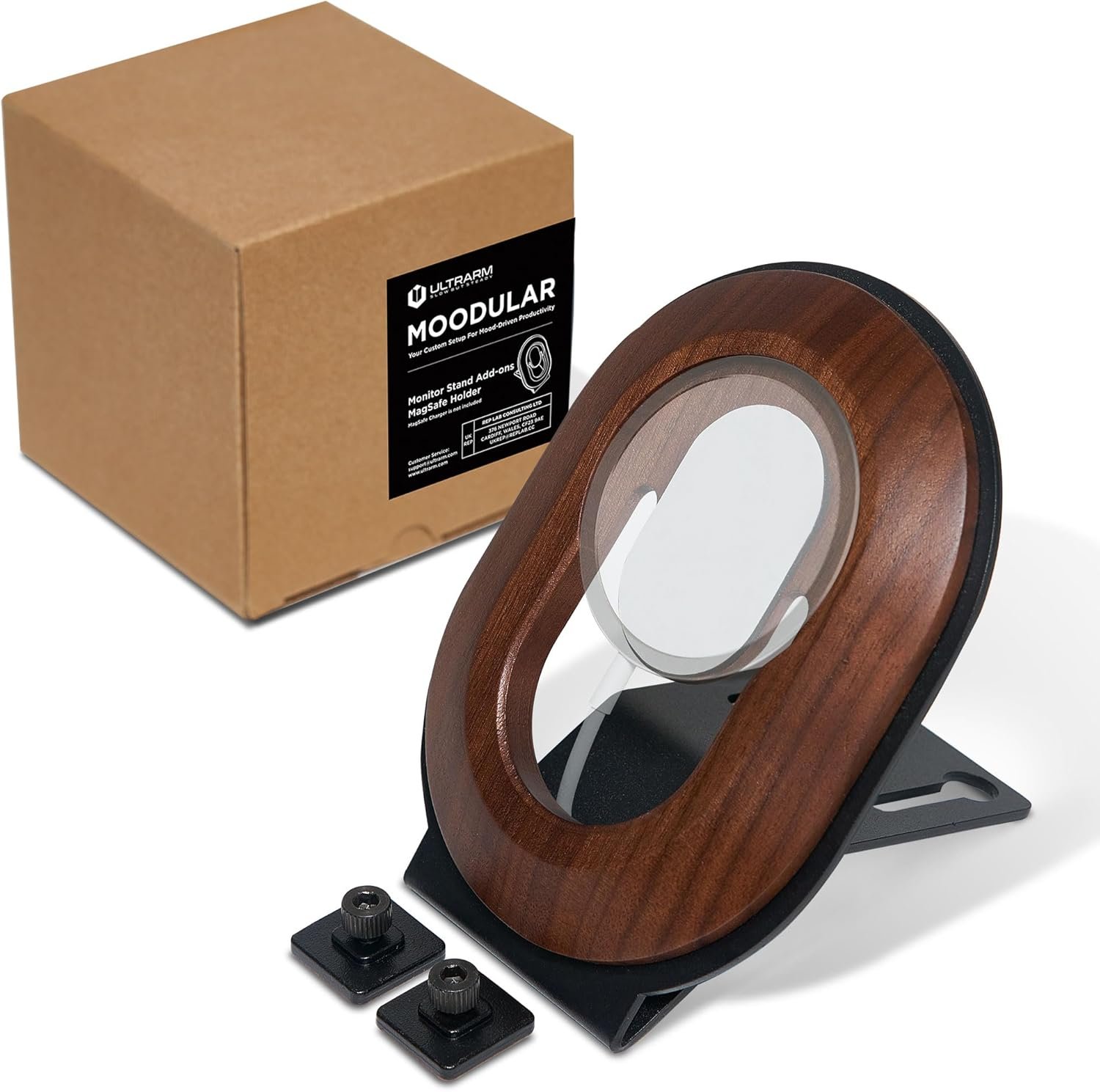
    • The Phone Stand: This keeps my phone in front and charging and displays notifications as they come in.
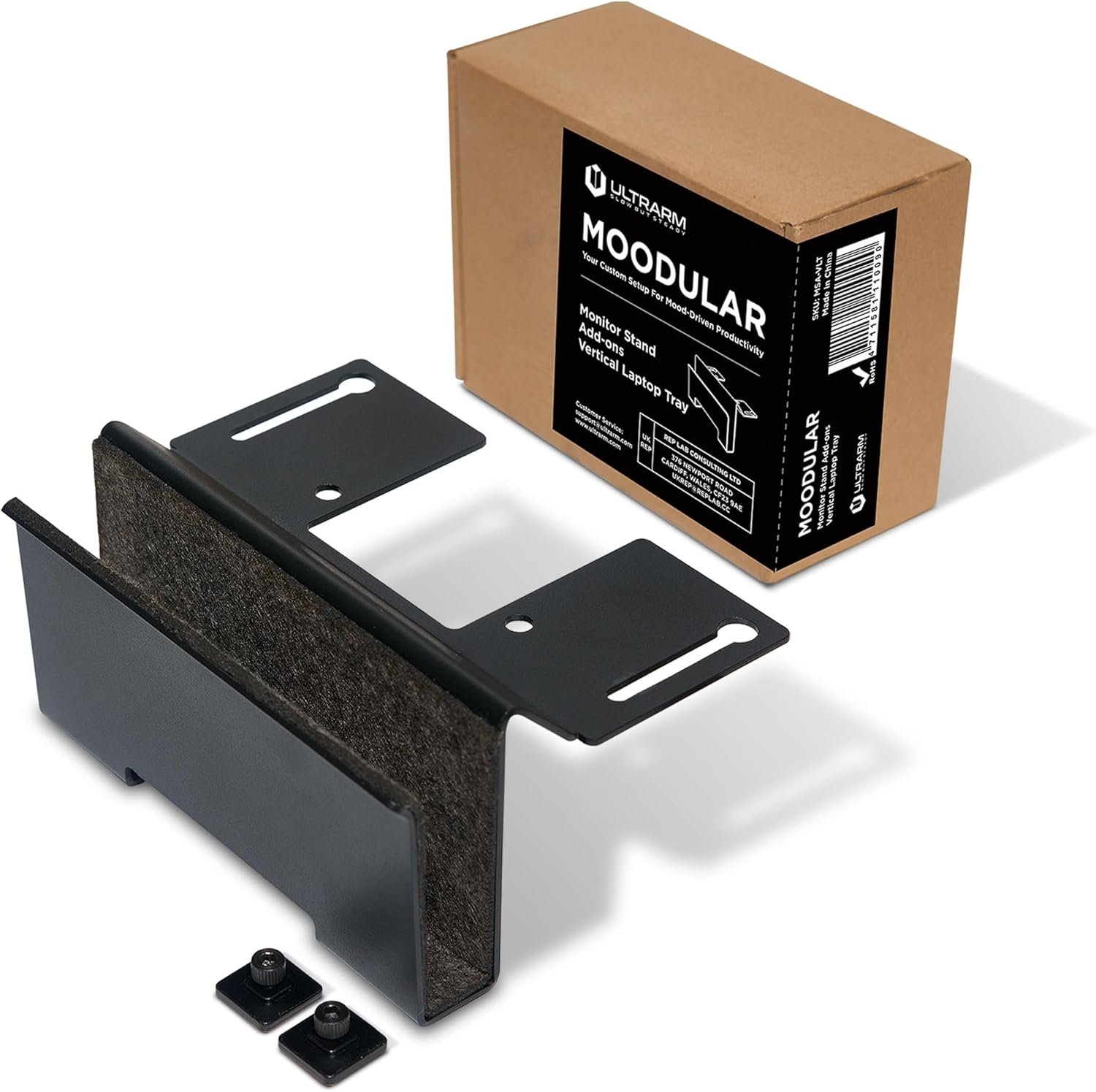
    • The Laptop Stand: This puts it to the side and plugged into my monitor. There is an option to have the laptop tray that allows the laptop to be opened, but I already have an ultrawide monitor.
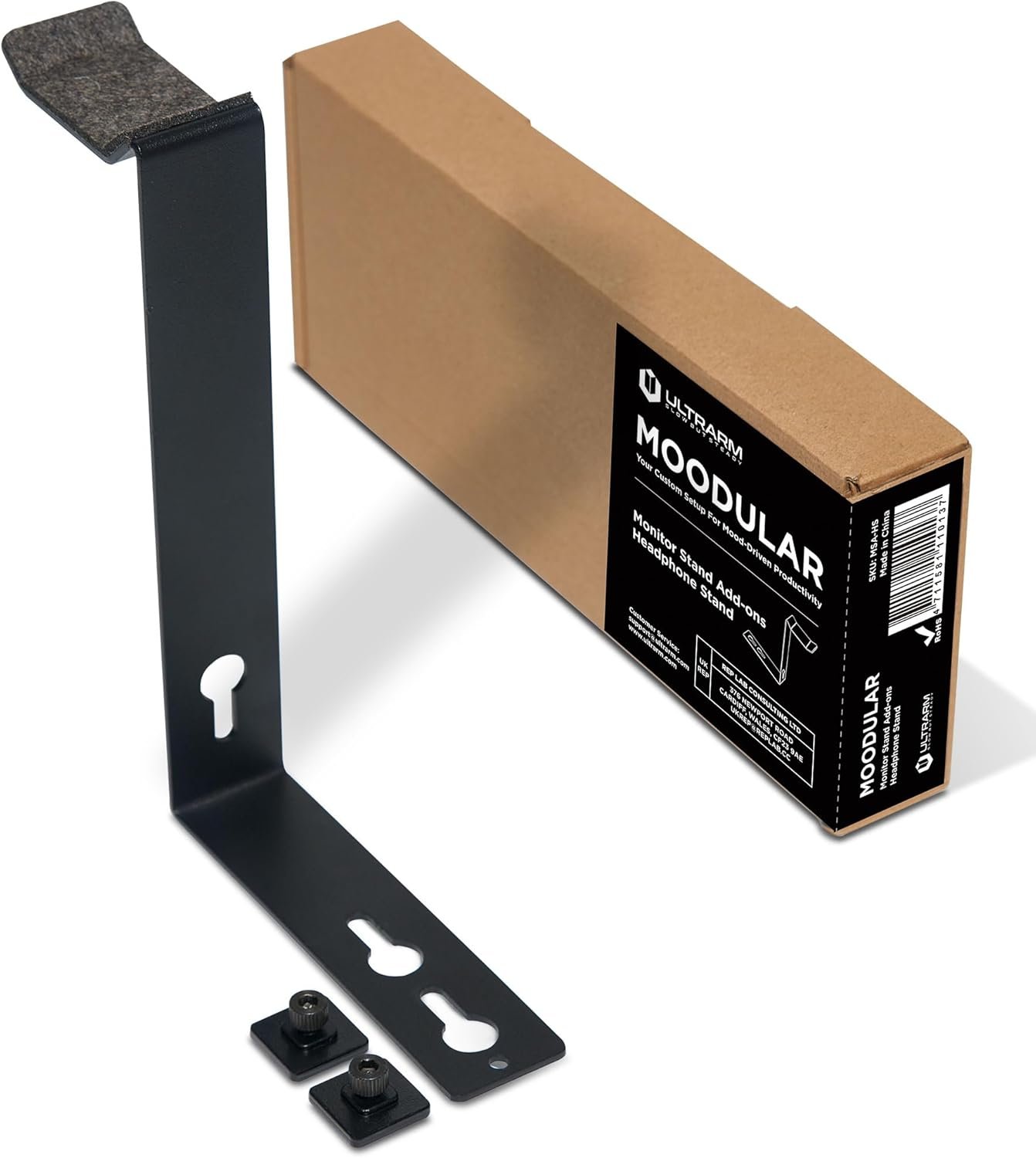
    • The Headphone Stand: A dedicated spot to slide my headset onto—no more cables tangled around my coffee mug.

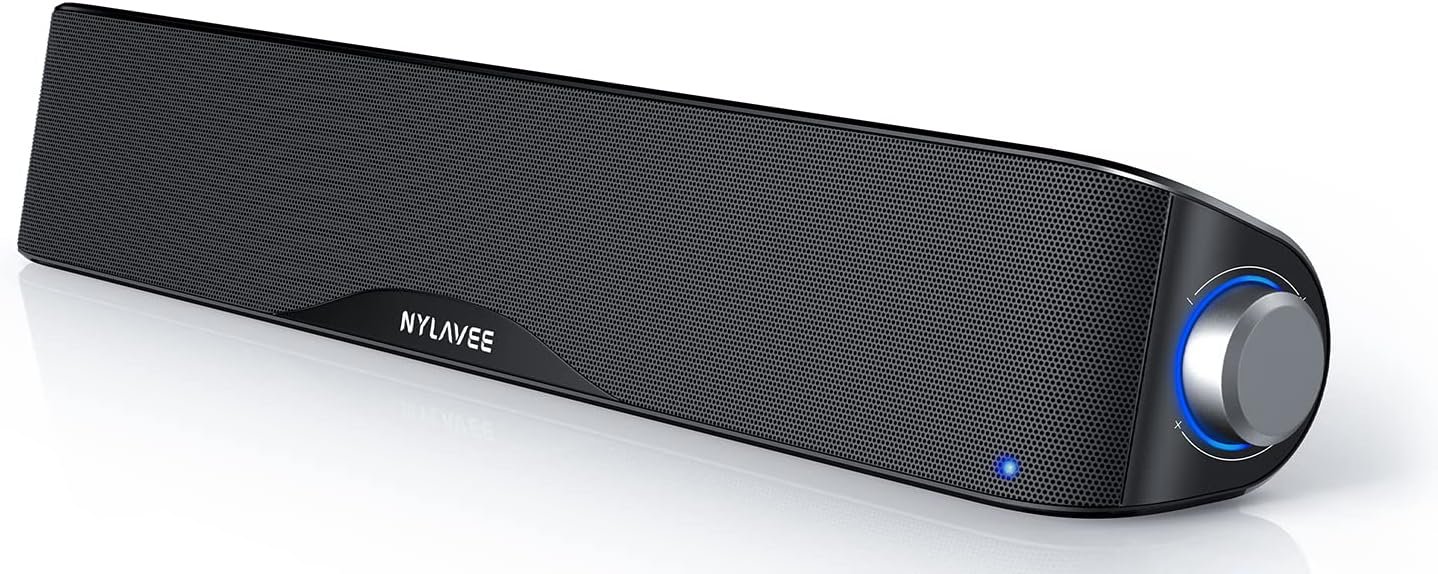
    2. Crystal Clear Communication: The Nylavee Soundbar

    If you’re still relying on tinny laptop speakers for your meetings, this is your sign to upgrade. I added a Nylavee Soundbar, and it has been a revelation for video conferences.

    • Voice Clarity: It pulls the audio forward, making voices sound rich and natural rather than distant and robotic.
    • Space-Saving: It tucks perfectly under the monitor riser, giving me premium audio without the footprint of bulky desktop speakers. It’s professional, sleek, and makes those back-to-back Zoom calls much less draining.

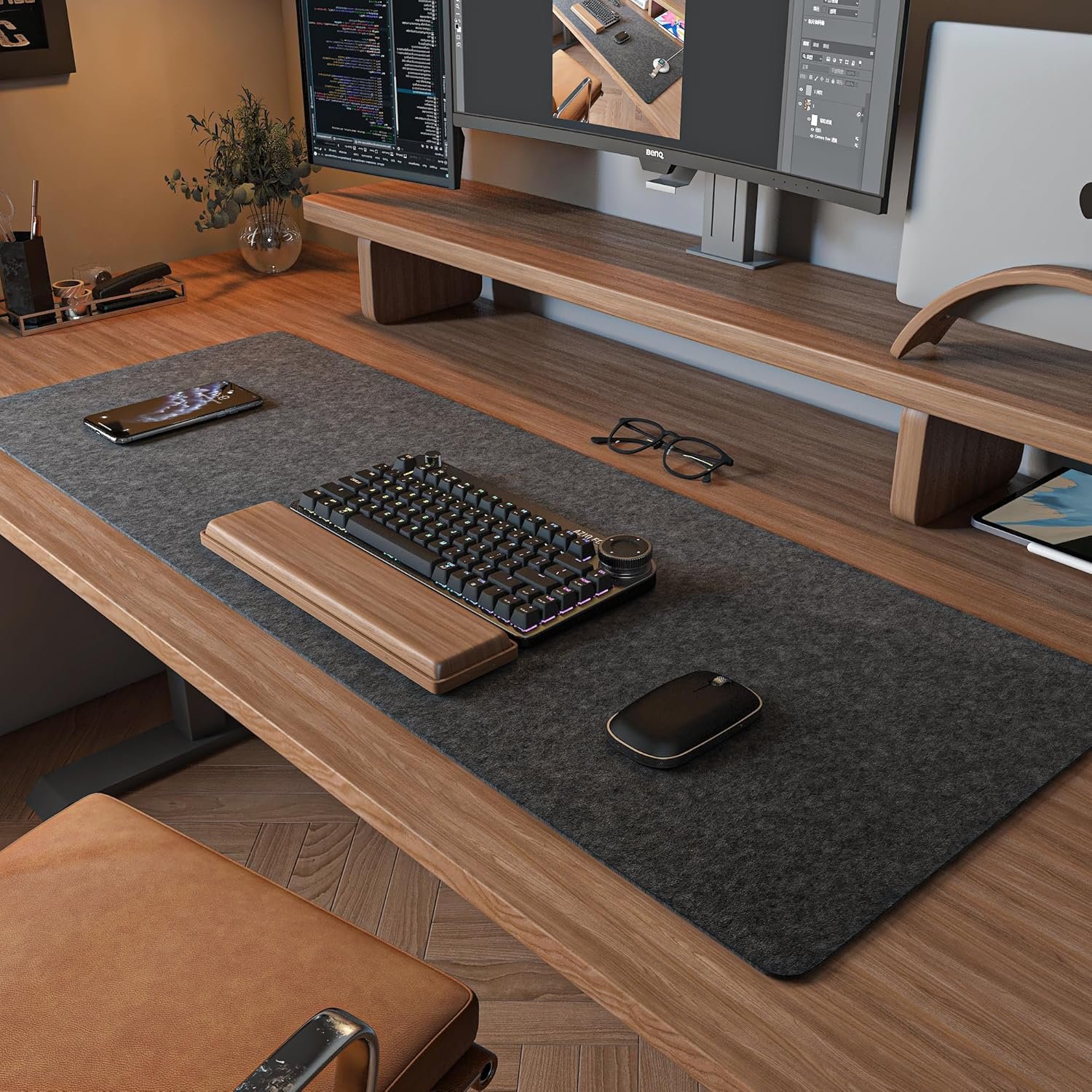
    3. Tactile Luxury: The DAWNTREES Felt Desk Mat

    The finishing touch—and the most underrated part—is the DAWNTREES Felt Desk Mat.

    If you’ve never used a felt mat, it’s a total vibe shift. It adds a layer of warmth and sophisticated texture that leather or plastic just can’t match. It softens the “clack” of the keyboard, provides a smooth glide for the mouse, and keeps the desk surface protected. Plus, it visually ties the black-and-wood aesthetic together beautifully.


    Why This Setup Works

    By lifting my gear off the desk surface and onto the modular rails, I’ve reclaimed a massive amount of space. Things aren’t just “scattered” anymore; they are intentionally placed.

    ItemThe “Game Changer” Factor
    Ultrarm Moodular Stand Total organization; everything has a home on the rails.
    Ultrarm Add-on Phone Stand for Magsafe Have your phone always in front of you.
    Ultrarm Add-on Vertical Laptop StandKeep the laptop out of the way.
    Ultrarm Add-on Headphone StandListen to your tunes without disturbing folks around you.
    Nylavee SoundbarHigh-fidelity audio that makes video calls feel like a boardroom.
    DAWNTREES Felt MatIncredible texture and comfort for all-day typing.

    My workspace now feels like a curated “Command Center” rather than just a place where I answer emails. It blends seamlessly with my room, looks incredible on camera, and—most importantly—makes the workday feel like a premium experience.

  • The Blueprint: Why We Built The Urban Manual

    The world is louder than ever, but higher quality is getting harder to find.

    We’ve all been there: scrolling through endless “top 10” lists that feel like they were written by robots, or buying a trending gadget only to have it break three weeks later. The modern marketplace is flooded with noise, clutter, and “fast” products that don’t actually solve problems.

    That’s why we created The Urban Manual.

    The Mission
    The Urban Manual is not just another review site. It is a curated digital guide designed for the individual who values strategy over trend and quality over clutter. We believe that your car, your finances, and the tools you use every day should work for you, not against you.

    We do the research, the testing, and the filtering. You get the blueprint.

    The Three Pillars of the Manual
    To help you navigate a more intentional life, we’ve organized our world into three core departments:

    The Garage: Where automotive passion meets practical utility. From the latest EV tech to the essential tools that keep your “daily driver” pristine, we explore the mechanics of the perfect drive.

    The Vault: Strategies for the modern economy. We deconstruct personal finance, budgeting, and wealth-building tools to help you automate your future and secure your lifestyle.

    The Kit: A curated selection of gadgets and gear. These are the “daily discoveries”—the Amazon finds and tech upgrades that actually earn their spot on your desk or in your pocket.

    What to Expect
    Moving forward, this space will serve as your go-to resource for high-level recommendations and practical advice. We won’t post everything—only the things that meet the “Manual” standard.

    Whether you’re looking to optimize your morning commute, clean up your investment portfolio, or find that one piece of tech that finally organizes your life, you’re in the right place.

    The search for the exceptional starts here.

    Welcome to the manual.

    — The Curator